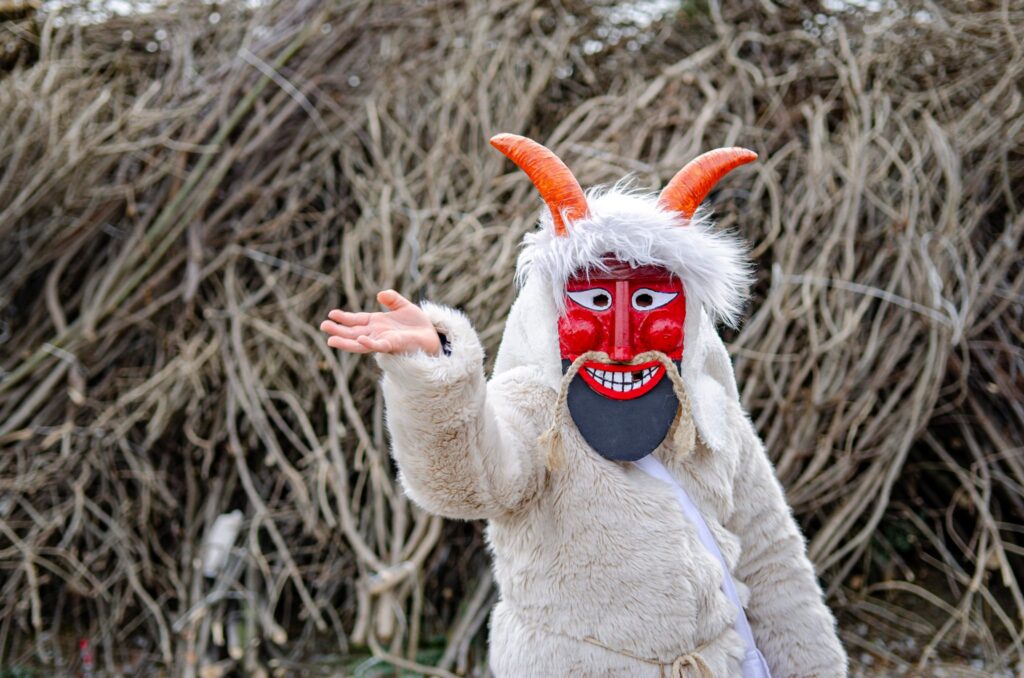
If you thought Europe’s carnival season was just Venice’s masks or Rio’s samba, think again! Hungary has its own unique and lively winter festival, Farsang, a hidden gem for adventurous travellers. From horned wooden masks to noisy parades and jam-filled doughnuts, here’s why you should experience it at least once.
The undisputed highlight is the Busójárás in Mohács, a six-day carnival on the Danube in southern Hungary. The town’s official page lists the 2027 festival as 4–9 February. Below you’ll find what happens on each day, how the dates are worked out, where else to celebrate, and how to get there from Budapest.
Farsang & Busójárás 2027 at a glance
| Busójárás 2027 | 4–9 Feb 2027 (official, mohacs.hu) |
| Main days | Sun 7 Feb (Farsang Sunday) and Tue 9 Feb (Shrove Tuesday); 2027 programme not yet published |
| Farsang season | Epiphany (6 Jan) to Shrove Tuesday, 9 Feb 2027 |
| UNESCO | Intangible Cultural Heritage list since 2009 |
| From Budapest | About 200 km, roughly 2h 15m by car (route estimate) |
| Last checked | 14 Nov 2026 |
What is Farsang?
Farsang is Hungary’s version of carnival, the season between Epiphany (6 January) and Ash Wednesday, marking the last stretch of winter before Lent. Think of it as a mix of Halloween, Mardi Gras and a wild masquerade, infused with Hungarian folk traditions. In village culture it was a time of less farm work and more fun: dressing up, making noise, dancing and feasting to see off the winter and welcome spring.

The legendary Busójárás of Mohács
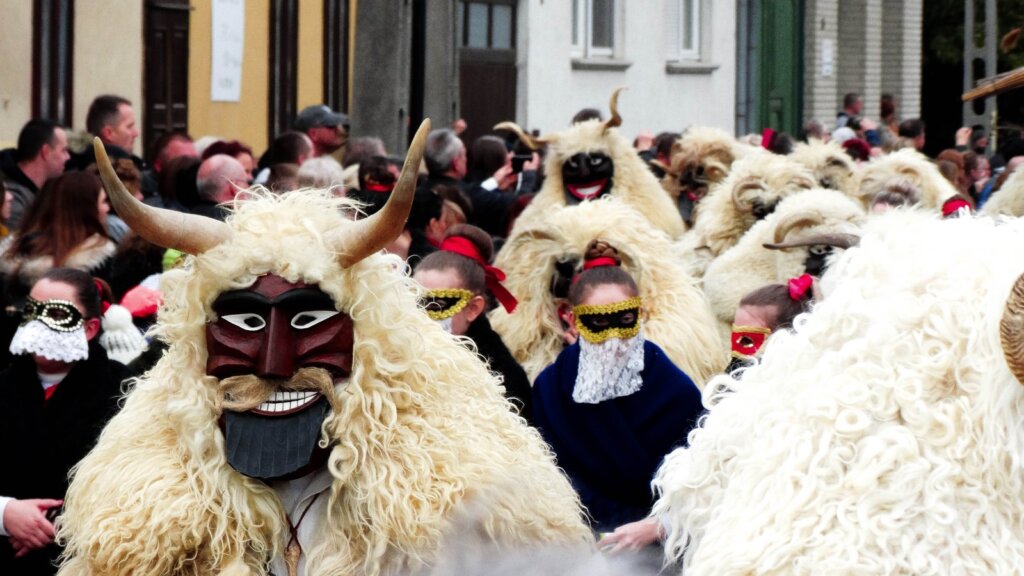
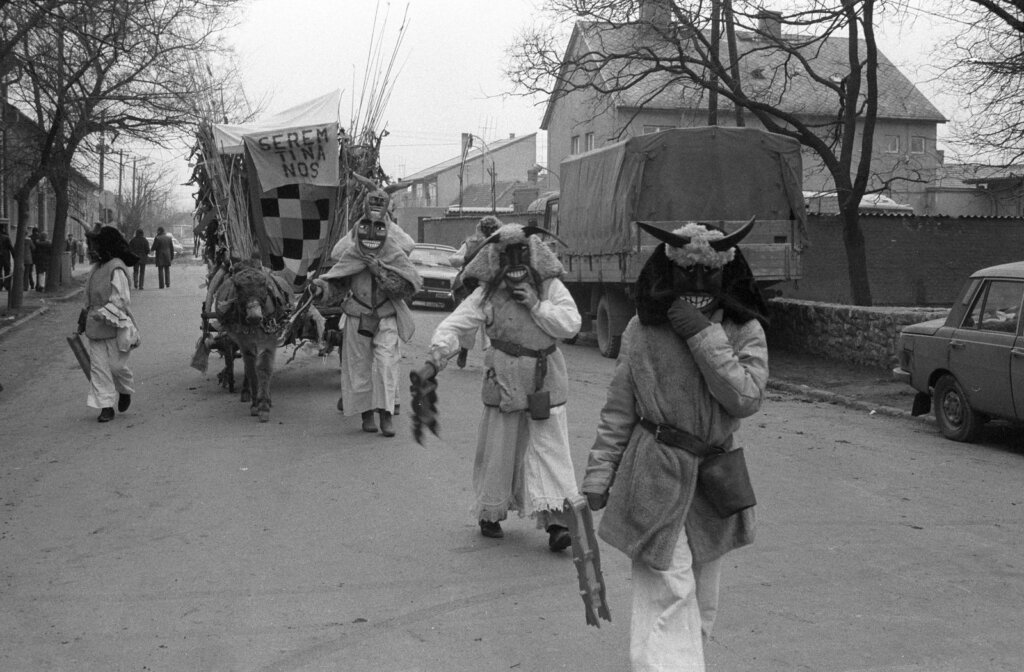
The highlight of Farsang is Busójárás (“the walk of the busós”) in Mohács, a custom of the town’s Šokac (Croatian) community that UNESCO added to its Intangible Cultural Heritage list in 2009. Men dressed as terrifying horned busós, in carved wooden masks and sheepskin cloaks, take over the town to chase away winter and welcome spring. Expect drums, rattles, cowbells, cannon fire, dancing and bonfires: chaotic, loud and thrilling.
Legend vs history: a popular legend says the Šokac people, hiding in the marshes of Mohács Island, put on frightening masks and crossed the Danube by night to scare the Ottoman Turks out of town. The town’s official history says this story has little historical basis: Mohács was freed from Ottoman rule in 1687 and the Šokac settled there about ten years later. Most likely they brought the custom with them from the Balkans, and the first records of it date from the late 18th century.
The busó costume
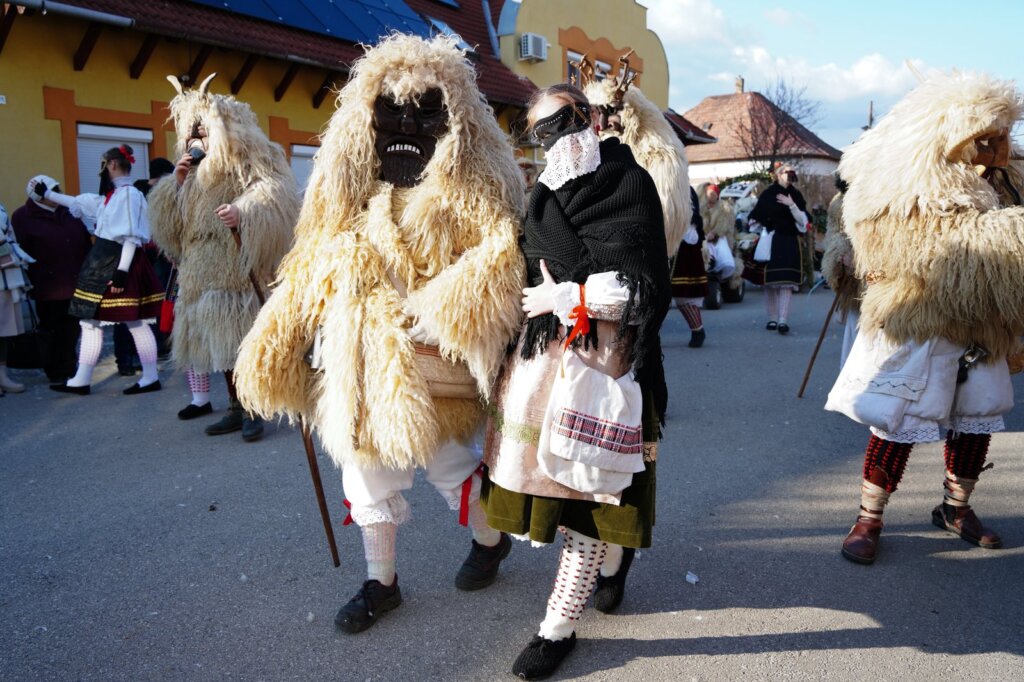
According to the official description, the costume has barely changed: a short sheepskin coat worn fur-side out, trousers stuffed with straw, colourful hand-knitted woollen stockings and leather bocskor sandals. A belt or rope holds the coat together, with a cowbell hanging from it, and each busó carries a wooden rattle (kereplő) or a spiked wooden mace. Most important of all is the mask: carved from willow wood, traditionally painted with animal blood and finished with a sheepskin hood.
The busós are joined by the jankele, whose job is to keep onlookers (especially cheeky children) away from the busós by swatting them with sacks once filled with ash or flour, today with rags or sawdust. Veiled women and men in wedding dress or carnival costume are called maskara.
What happens on Farsang Sunday
The modern festival starts at Kóló tér, the historic heart of the custom. Busós, jankele and maskara gather there and meet the busós who have crossed the Danube by boat, together with groups pulling cannons, “devil’s wheels”, carts and more. At the boom of the old busó cannon they march along the main street to the town’s main square, where the free-for-all carnival begins. Later the celebration spills onto the Danube bank and the surrounding streets. At dusk everyone returns to the main square to dance around a huge bonfire.
On Shrove Tuesday the town celebrates again: a coffin representing winter is placed on a new bonfire on the main square and burned, as Mohács says goodbye to the cold season and welcomes spring.


Busójárás 2027 dates, day by day
The town of Mohács lists Busójárás 2027 as 4–9 February 2027 (mohacs.hu). The detailed 2027 programme with times is not yet published; the official festival site, mohacsibusojaras.hu, still shows the 2026 edition. The table shows the traditional pattern of the main days.
| Day | 2027 date | Traditionally |
|---|---|---|
| Thursday | 4 Feb | Festival begins; on the last Thursday of Farsang the children dress up in masks |
| Sunday (Farsang Sunday) | 7 Feb | Main day: Danube crossing, procession to the main square, bonfire at dusk |
| Tuesday (Shrove Tuesday) | 9 Feb | Burning of the coffin of winter on the main square |
| Wednesday (Ash Wednesday) | 10 Feb | Lent begins; Farsang is over |
How the dates are worked out
Busójárás is tied to Easter, a movable feast: the official page explains that its timing follows the first full moon after the spring equinox. Traditionally the festival runs from the Thursday before Ash Wednesday to Shrove Tuesday. Easter Sunday 2027 is 28 March, so Ash Wednesday is 10 February. Counting back gives Thursday 4 February to Tuesday 9 February 2027. That calculation matches the official dates published by the town, but treat our day-by-day pattern as the traditional schedule, not the confirmed 2027 programme.

Where else to experience Farsang
- Mohács: for the ultimate Farsang experience, don’t miss Busójárás (4–9 February 2027).
- Budapest: the Museum of Ethnography (Néprajzi Múzeum) held a full Farsang day on 14 February 2026 with mask-making, music and guided tours about busójárás and other carnival customs. The 2027 programme is not yet published; check neprajz.hu. The city also hosts carnival balls, concerts and themed parties in February. See our Budapest in February 2027 guide.
- Szentendre, Eger, Debrecen and other towns hold their own smaller Farsang events, from parades to family carnival days. Programmes are announced locally each winter, so check the town’s Tourinform office.
What to eat and drink
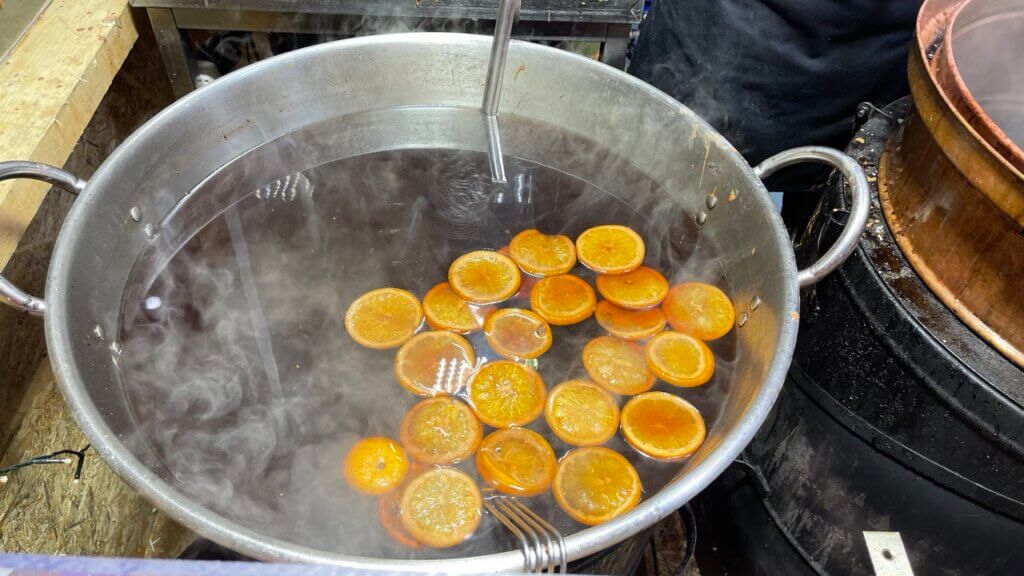
And the food? Farsang is doughnut season! Pair a sweet treat with something warming and you’ll feel cosy even in the winter chill.

Getting to Mohács from Budapest
Mohács lies on the Danube in Baranya county, about 200 km south of Budapest, roughly 2 hours 15 minutes by car (route estimate; allow extra time on festival days). On the busiest days the town gets very crowded and parking is tight, so a private transfer that drops you near the centre and waits for the return trip is the easiest option.
- Leave Budapest in the morning so you arrive before the procession. Check the official programme for 2027 start times once it’s published.
- Start at Kóló tér where the busós gather and the boats arrive from across the Danube.
- Follow the procession along the main street to the main square.
- Stay for the bonfire at dusk the most atmospheric moment of the day.
- Ride home with a driver who is waiting for you, with no crowded trains.
Insider tip
Wear warm, waterproof boots and clothes you don’t mind getting a little dusty: the jankele swat onlookers with their rag- or sawdust-filled sacks. Book accommodation in Mohács or nearby Pécs early if you want to stay for Shrove Tuesday.
Pickup Hungary doesn’t have a dedicated Budapest–Mohács page yet, but you can request the route in our booking form. We also run private transfers from Budapest to Pécs, the regional centre nearest to Mohács.
FAQ
When is Busójárás 2027?
The official page of the town of Mohács lists Busójárás 2027 as 4–9 February 2027. The detailed programme with times is not yet published.
Which is the main day of Busójárás 2027?
Traditionally Farsang Sunday, which in 2027 is 7 February, with the procession and the bonfire at dusk. The coffin of winter is burned on Shrove Tuesday, 9 February 2027.
How are the dates of Busójárás set?
They follow Easter. The festival traditionally runs from the Thursday before Ash Wednesday to Shrove Tuesday. Easter 2027 is 28 March, so Ash Wednesday is 10 February and Busójárás runs 4–9 February, which matches the official dates.
Is Busójárás a UNESCO tradition?
Yes. The Busó festivities at Mohács were added to UNESCO’s Representative List of the Intangible Cultural Heritage of Humanity in 2009.
How far is Mohács from Budapest?
About 200 km by road, roughly 2 hours 15 minutes by car (route estimate). Allow extra time on festival days.
When is Farsang in 2027?
Farsang runs from Epiphany (6 January) until Shrove Tuesday, which is 9 February 2027. Lent begins on Ash Wednesday, 10 February.
Farsang is a sensory overload in the best possible way, whether you join the parade, admire the folk traditions or eat your weight in doughnuts. And visiting Hungary in winter means fewer tourists. So if you’re after an offbeat winter adventure, bring your appetite and a warm coat, and get ready to chase away the cold at Hungary’s most exciting festival. Would you dare to meet the busós face to face?
Related experiences in southern Hungary
Going to Busójárás 2027?
Ask us for a private return transfer from Budapest to Mohács: fixed price, door to door, and a driver who waits for you.
Get a quotePhoto credits: Busós in sheepskin and wooden masks parading with a Šokac woman at Busójárás: AlpeolA photo Olga CM, Wikimedia Commons, CC BY-SA 4.0; Close-up of a horned Busó mask in the crowd at Busójárás: Arkinessa, Wikimedia Commons, CC BY-SA 4.0; Busó and women in Šokac folk costume walking in the Busójárás parade: AlpeolA photo Olga CM, Wikimedia Commons, CC BY-SA 4.0; The Farsang coffin floating on the Danube at the end of Busójárás: Arkinessa, Wikimedia Commons, CC BY-SA 4.0; Busójárás in Mohács in 1979: Fortepan / Erdei Katalin, Wikimedia Commons, CC BY-SA 3.0; other photos: Pickup Hungary.